When the Pot Turns
Tahdig and the Hidden Beauty of Iran

News from Iran today is dominated by war: airstrikes, retaliation, missiles, and the threat of a widening regional conflict. In recent weeks the United States and Israel have launched attacks on Iranian targets, while Iran has responded with missile strikes across the region, escalating a confrontation that has already caused significant destruction and loss of life.
When a country appears in headlines this way, it is easy for the place itself to become flattened into a story of conflict. Yet Iran is also a country of extraordinary cultural depth: poetry, architecture, gardens, hospitality, and one of the most beautiful food traditions in the world. The people I have met from Iran carry that generosity with them, and their cuisine expresses it better than almost anything else.
Persian cooking is built on balance and patience. Herbs, sour fruit, saffron, nuts, and rice appear again and again, layered carefully rather than loudly. Rice, in particular, sits at the centre of the table. But rice did not originate there. It travelled west from China along the routes of merchants, migrants, and conquerors, eventually reaching Persia where it entered a landscape shaped by ingenious irrigation.
Ancient Persian engineers developed the qanat system more than 2,500 years ago: underground channels that carried water from aquifers across dry land. A qanat is a gently sloping tunnel, sometimes stretching for kilometres, punctuated by vertical shafts used for maintenance and ventilation. Gravity moves the water slowly through the system, allowing agriculture to exist in landscapes that would otherwise be desert. These networks sustained towns, crops, and entire empires. Like the rice paddies of China, they required cooperation and careful management of scarce water.
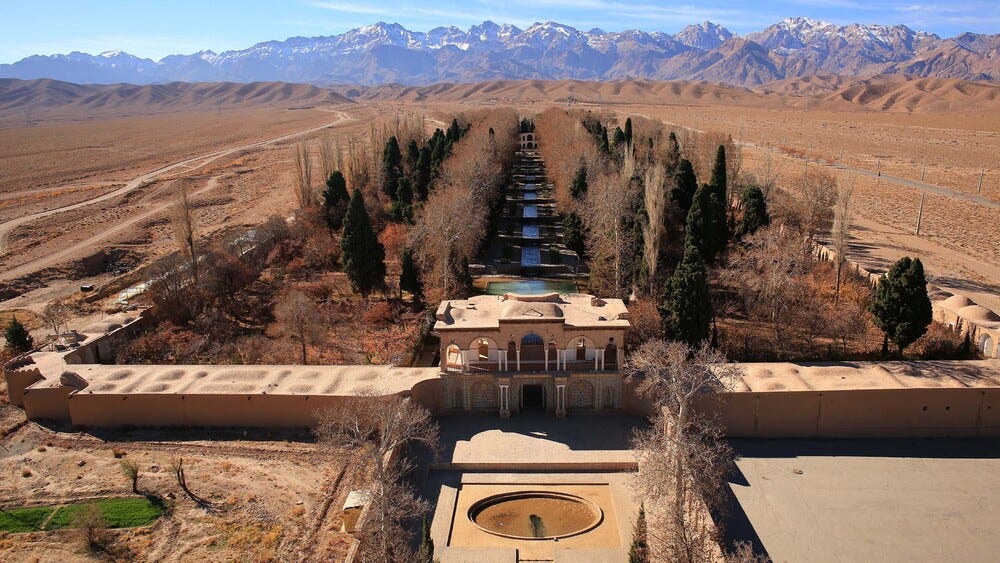
In places where irrigation made it possible, along the Caspian coast and in parts of Khuzestan, rice became part of Persian agriculture. Because water was precious, rice also came to signal refinement. Persian cooks transformed it into something elegant rather than simply filling.
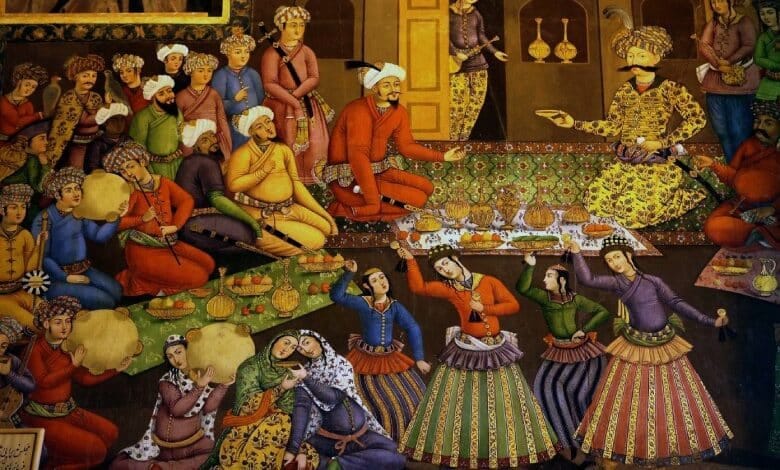
At the Safavid court in Isfahan, recently damaged by US-Israeli bombing, rice became spectacle. Banquets unfolded in palaces and gardens where dishes were arranged with architectural care. Pilafs glittered with barberries, pistachios, saffron, and pomegranate seeds. Serving rice in abundance demonstrated the Shah’s ability to command labour, water, and land. Politics was translated into food.
But the most dramatic expression of Persian rice culture is tahdig.
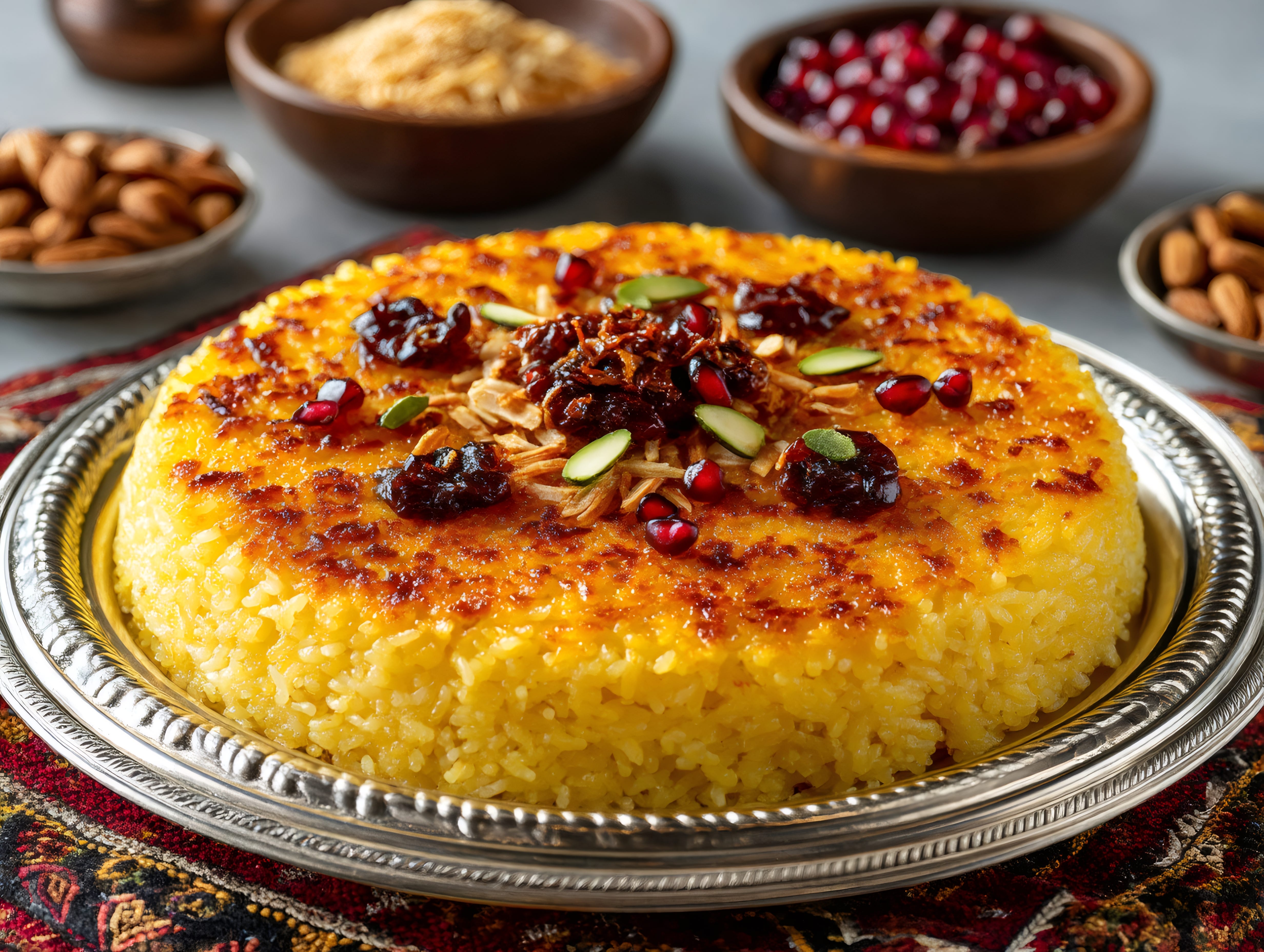
Tahdig, pronounced tah-deeg, literally means “bottom of the pot” in Persian/Farsi. It refers to a beautiful, pan-fried Persian rice that is fluffy and buttery on the inside with a perfectly golden crust.
For Iranians that crispy crust at the bottom of the pot is the prize of the meal.
Making it requires patience and nerve. The rice is rinsed until the water runs clear, parboiled, then piled back into the pot over butter and saffron, sometimes yogurt. A cloth is wrapped under the lid to trap the steam. The rice forms a tall cone while the heat slowly works on the bottom layer, transforming it into a golden crust.
And then comes the moment.
The pot is lifted from the stove. Everyone watches. There is always a pause, because what happens next matters. The platter is placed over the pot and the cook flips the whole thing in one decisive movement. For a second nothing happens. Then, if the heat, timing, and luck have aligned, the pot lifts away and the tahdig slides out intact: a perfect, burnished disc, crisp and fragrant, the colour of toasted saffron.
There is always a small gasp then hands reach in immediately.
Tahdig is more than texture. It is performance, generosity, and pride. Who gets the first piece matters. To serve it generously is to show hospitality; to hoard it would be unthinkable.
If you want to understand Iranian food beyond the headlines, a wonderful place to begin is The Saffron Tales: Recipes from the Persian Kitchen by the brilliant Yasmin Khan. The book has been described as a love letter to Iran’s people and its rich culinary traditions, capturing the scents, stories, and generosity of Persian kitchens.
In times when Iran is spoken about mostly in the language of conflict, its food reminds us of something quieter and older: a culture built around beauty, hospitality, and the shared pleasure of a meal.
Thanks, Heaven, for shedding a different light on Iran without being escapist